
Reimagining an artist’s ecommerce site to anticipate customers’ needs
Jean Pierre Weill
Overview
This case study focuses on the redesign of an artist's e-commerce site for jeanpierreweill.com. The objective is to enhance the user experience and improve the overall design of the website to anticipate customers’ needs and pain points.
This was a 3 month long, for hire, freelance position.
Identifying the Problem
Our initial user research including site analytics and 10 customer interviews, helped to identify the problems with the current website and propose solutions. Some key issues that jeanpierreweill.com faces include imprecise naming and labeling for product categories, complex navigation, and no user reviews. By addressing these problems, the redesigned website can offer a more intuitive and seamless user experience that anticipate user needs and pain points
Home
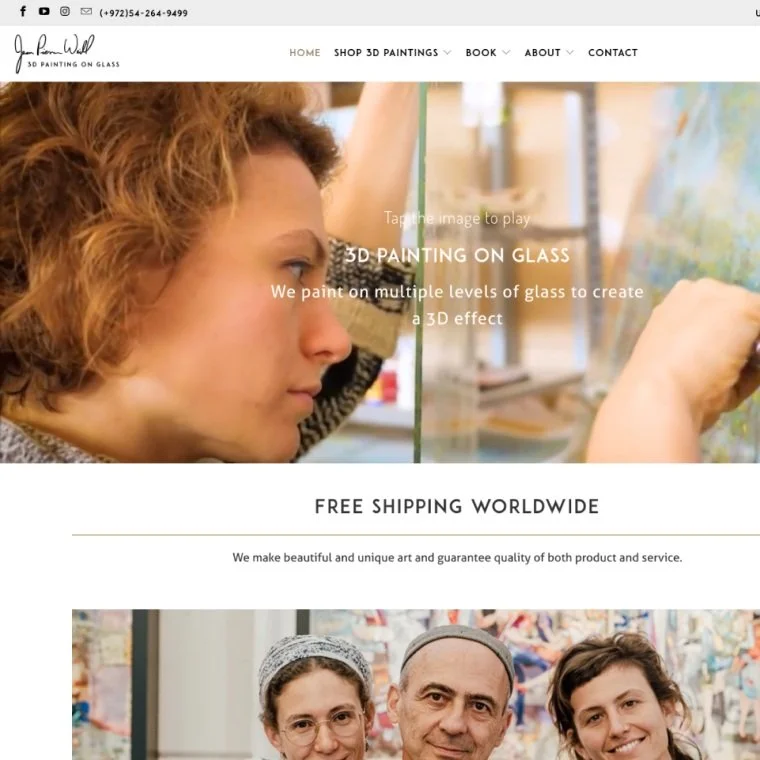
Before
After
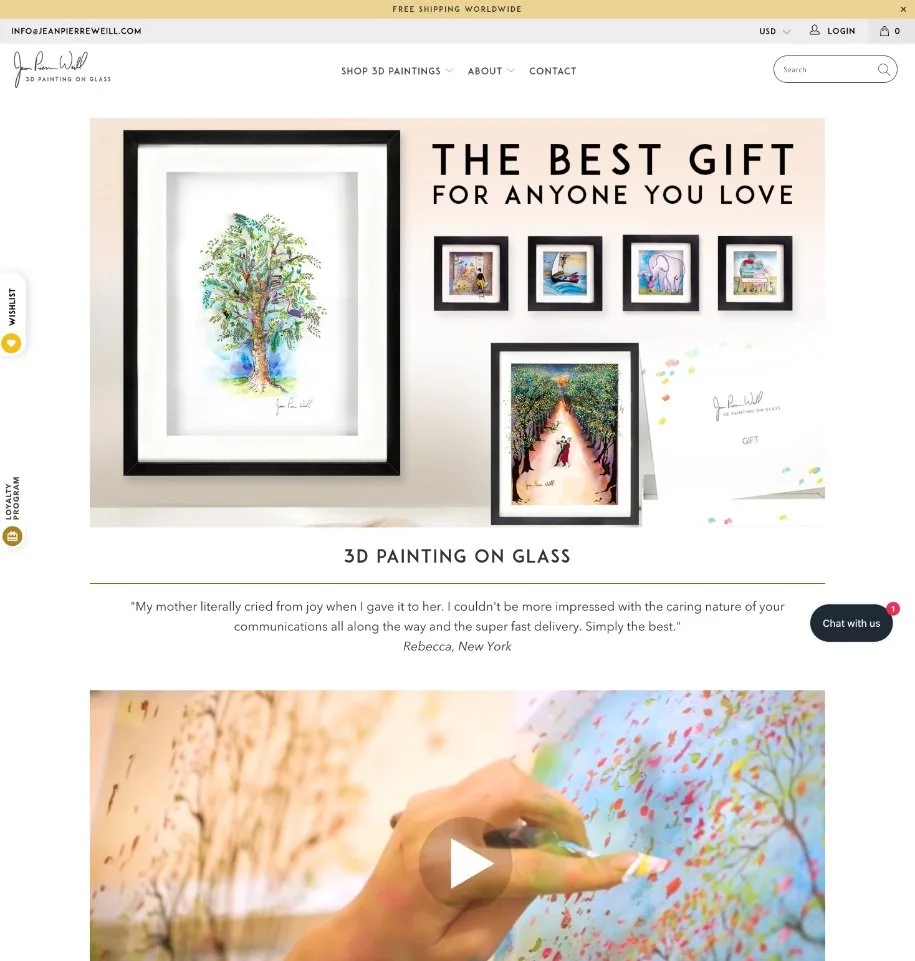
The main navigation is simplified in the redesign utilizing 3 main categories; Shop, About, Contact. In addition, current promotions and customer testimonials are prioritized and the video prominently features a play button instead of the text “tap to play video”.
Design and Iteration
Once the problems are identified and solutions are proposed, the design phase can begin. This involves creating wireframes and visual designs that align with the brand's aesthetics while considering usability principles and best practices. Figma and other design tools can be used to create these wireframes and mockups. Iterative design processes should be employed, gathering feedback from stakeholders and potential users to refine the design.
Product Categories
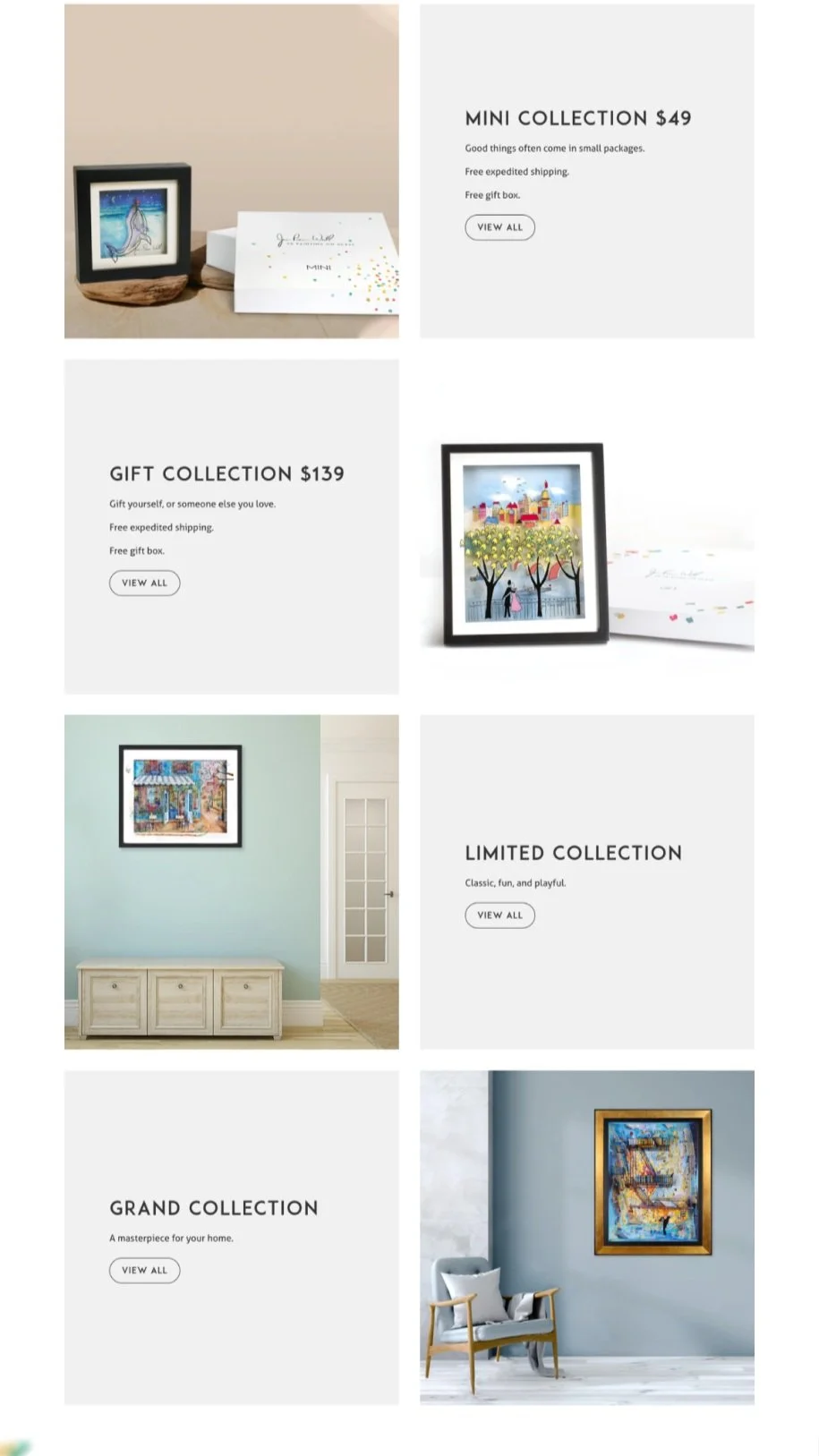
Before
After
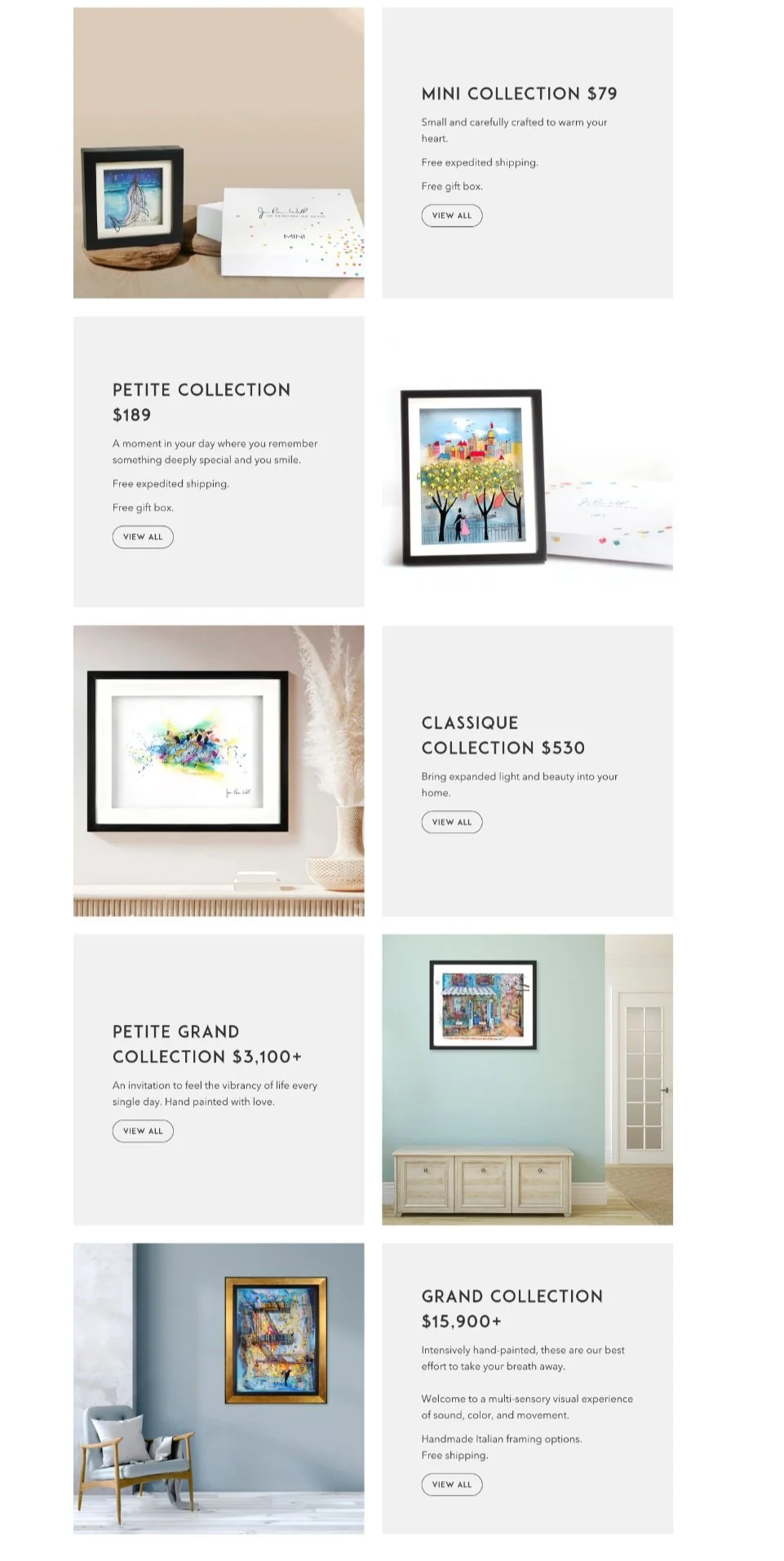
In our redesign, the labeling of product categories is descriptive, based on user feedback utilizing 5 main categories; Mini, Petite, Classique, Petite Grande and Grande. In addition, price points for each category are included both on the main page next to each product category title and also in the main navigation.
After

The price points of each product category are listed in the main navigation menu next to each product category title under the Shop tab
Product Grid
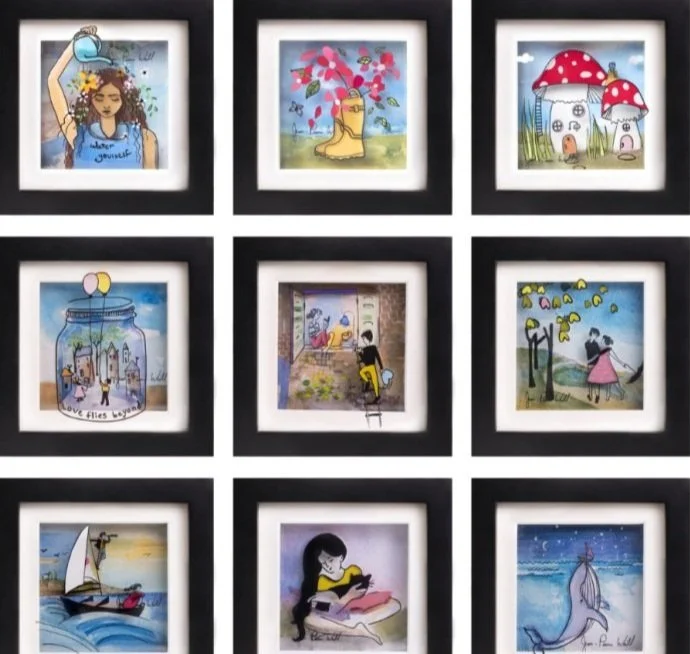
Before
After
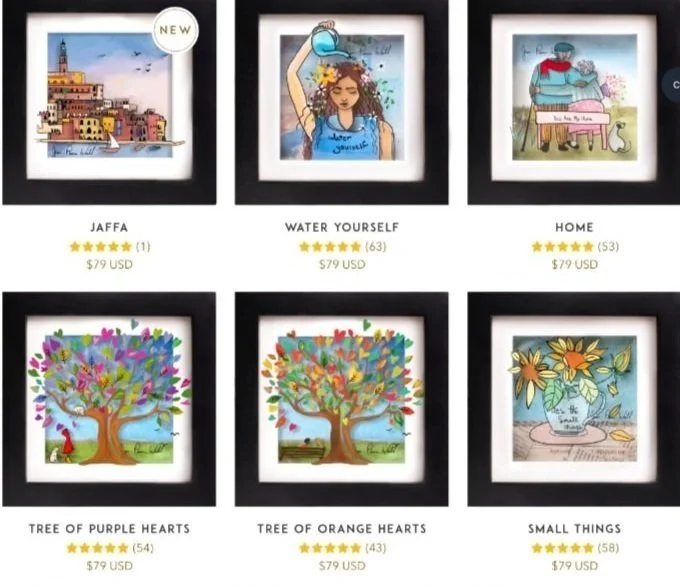
In the redesign, the browse product category page for each product includes the titles, prices and customer review preview, whereas in the original site there was just an image preview.
Conclusion
Redesigning Jean Pierre Weill's e-commerce site involved a comprehensive approach that included competitive analysis, research, problem identification, design, development, and testing. By following these steps, the aim is to create a visually appealing, user friendly website that enhances the overall user experience. Ultimately, the success of the redesign can be measured through metrics such as increased user engagement, improved conversion rates, and positive user feedback.